
Getty Institute UAM CSULB
4:12
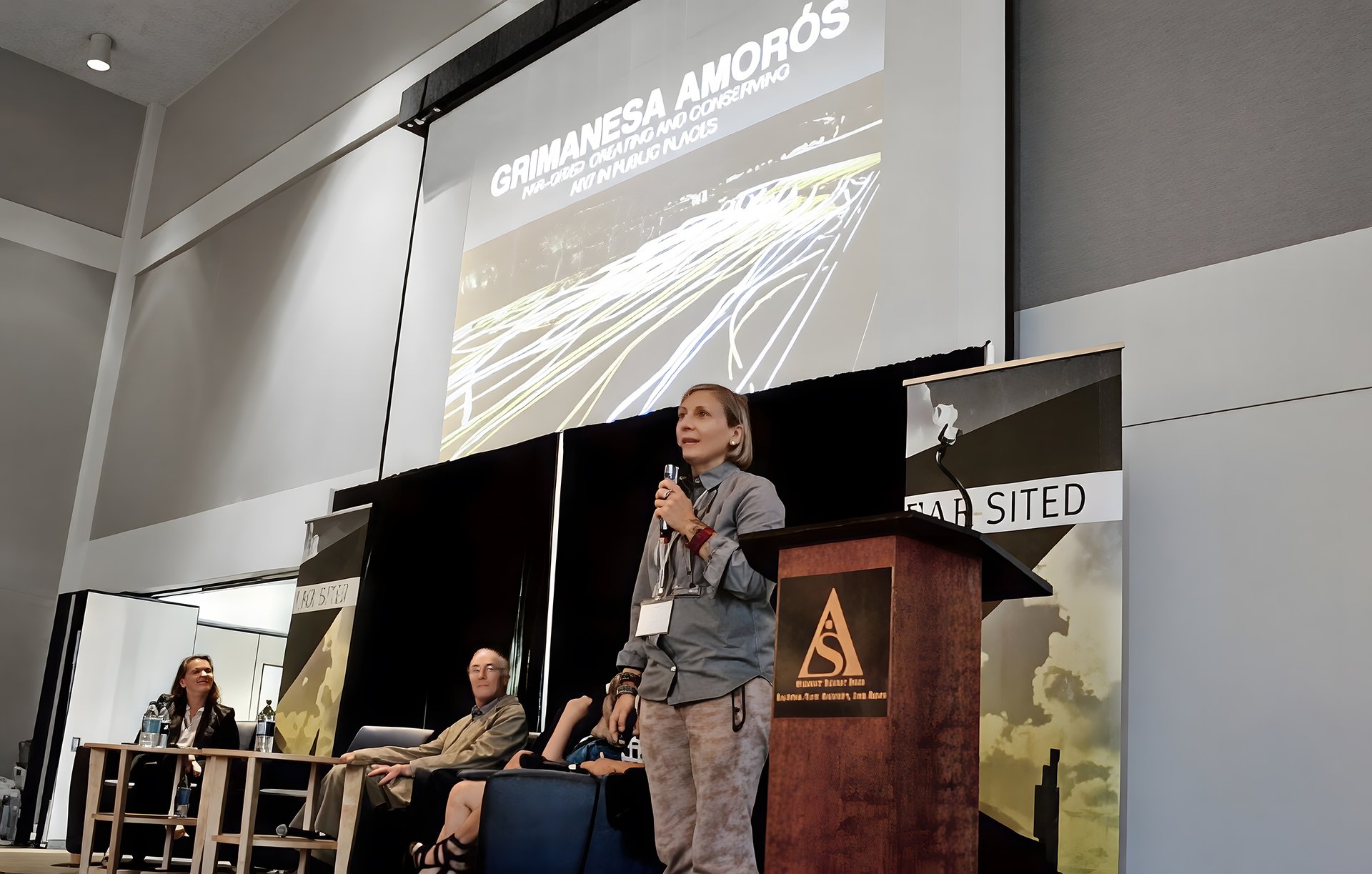
The J. Paul Getty Trust Getty Institute FAR-SITED x UAM CSULB 2015 | The Cassandra Complex = Conservation Issues in Public Art | Long Beach, CA, United States
Host:
Brian Trimble, Interim Director at the University Art Museum CSULB
Moderator:
Rachel Rivenc, Associate Scientist at Getty Conservation Institute
Panelists:
Grimanesa Amoros, Artist, Rosa Lowinger, Principal and Chief Conservator of the RLA Conservation of Art & Architecture
The J. Paul Getty Trust is the world’s largest cultural and philanthropic organization dedicated to the visual arts. It advances and shares the world’s visual art and cultural heritage for the benefit of all. It is a cultural and philanthropic institution dedicated to the presentation, conservation, and interpretation of the world’s artistic legacy. Through its constituent programs’ collective and individual work, Getty pursues its mission in Los Angeles and across the globe. It serves both the general interested public and a wide range of professional communities to promote a vital civil society by understanding the visual arts.
Getty Institute FAR-SITED is a conference on public art co-organized by the Getty Institute, the University Art Museum at California State University Long Beach, and the Museum of Latin American Art.
To watch the complete conference on YouTube, please click here.
(0:46) Good afternoon. I just want to say thank you for having me. This accumulation made a lot of the different ecosystems. There was a lot of fissures…
(1:48) To me, that would be a new form. And, yes, indeed, I’m open. I’m always open. It’s flexible. You know, you have to go underwater.
(2:03) I love the ephemeral part of it. That’s the part that I love about lighting. You know, you want to stay in that moment, but you really, truly, you can’t. You can’t catch it. You know, of course, the lighting is inside this structure, this physical sculpture, but you can’t really have it for yourself.
(2:27) The challenge here would be, in the next 50 years, have the equipment, the computer, to be able to read it. That’s the key to me.
(2:47) The ones that before had different hues and the colors were much more intense. So, the piece, really, truly, will never be the same.