
UBS x Art Basel HK
15:59
UBS x Art Basel Hong Kong 2018 | UBS Art Basel HK | Hong Kong
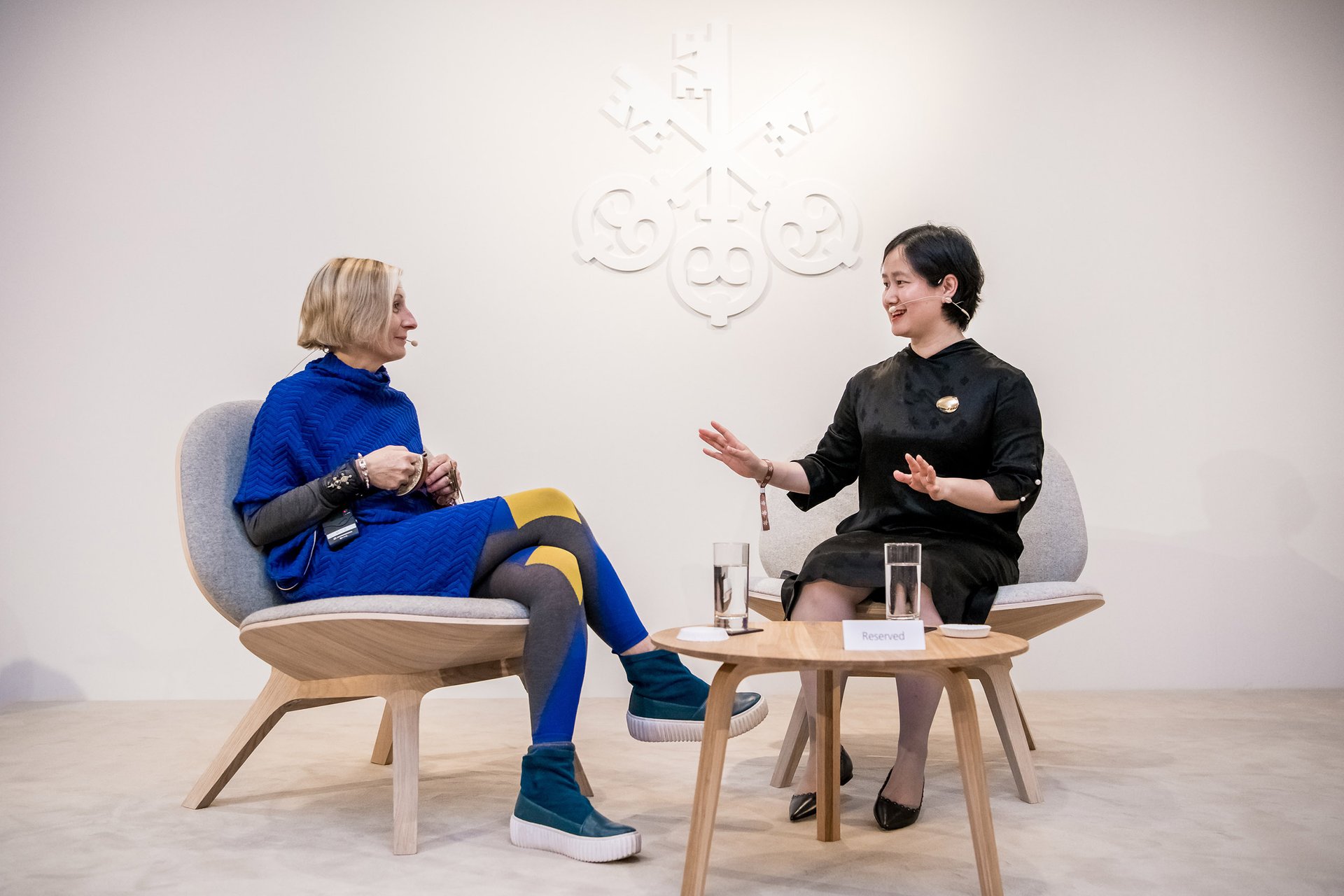
Open Classroom-Artist in Focus:
Grimanesa Amoros
Moderator:
Dr. Qilan Shen, Curator, Writer, and Art Critic
UBS: A Global Leader in Supporting Contemporary Art
As the lead partner of Art Basel in Hong Kong since 2014, UBS has a long and distinguished history of supporting contemporary art and artists. The firm is not only a major player in the financial world but also a key contributor to the global art community, with one of the world’s most influential corporate art collections.
Through its global lead partnership with Art Basel, UBS has helped shape the international conversation about the art market. One of its notable contributions is the co-publication of the “Art Basel and UBS Global Art Market Report,” a comprehensive analysis of trends and developments in the art world. This report provides valuable insights for collectors, artists, and institutions, fostering a deeper understanding of the art market’s dynamics.
UBS’s commitment to the arts extends beyond Art Basel. The firm has established partnerships with some of the world’s most prestigious art institutions, including:
-
The Fondation Beyeler in Switzerland
-
The Art Gallery of New South Wales in Australia
These collaborations reflect UBS’s dedication to promoting cultural exchange and supporting the arts on a global scale.
Grimanesa Amorós: Classroom-Artist in Focus
As part of its initiatives, UBS also supports educational programs that connect artists with audiences. Renowned artist Grimanesa Amorós participated as a Classroom-Artist in Focus, sharing her creative journey and insights into her large-scale light installations. Amorós’s work, which blends art, technology, and cultural narratives, has captivated audiences worldwide.
During her session, Amorós discussed her artistic process, the inspiration behind her installations, and the challenges of working with light as a medium. She also emphasized the importance of art in fostering cultural understanding and social change, inspiring students and art enthusiasts to think creatively and embrace innovation.
(0:21) Yes, thank you very much, Qilan. And thank you to UBS for this opportunity to be able to share with all their audience and my work. We are looking at now the image of Aurora Borealis, and that’s, Qilan wanted to know about how did I start working with light? Well, it’s quite interesting.
(1:04) I started, Qilan, when I was very young in Peru. And since I live very near the Pacific Ocean, I was always very obsessed by the foam and the reflection that it had with the light. And I used to remember going ahead and popping every single bubbles, like I would say at that time, exactly.
(1:23) And also get lost in between the foam because it was quite large. And I think that to me, the starting of wanting to become an artist and exploration with light. And until maybe 2000, I had the opportunity to be in Iceland and I couldn’t sleep.
(1:41) And then all of a sudden I woke up and I saw this unbelievable sky. At the time, I didn’t know that it was obviously an Aurora Borealis or the Northern Lights. I wouldn’t stop saying, wow.
(1:52) And so I said, if I could only share this with others, wouldn’t it be amazing? It was a fascination with light that actually I wouldn’t be able to stop saying just, wow. But it took me a while to become and to find a structure in which I could be able to share the ever-changing of light.
(2:34) Absolutely. So it became two structures. One, it was the Uros series. Yes. It was these floating sleds in Puno, in Lake Titicaca, that it had the same parallel of the ever-changing because these are all made by these giant plant stalks called Totora reeds, which the Uros, they are Pre-Inca people, they dry and they make everything from these reeds, including their boats, their houses and the islands itself. And if they don’t maintain them, they actually get rot and they get sunk.
(3:10) So I got quite fascinated because obviously they used to be over 400 and now I think they’re 28. Of course, you know, the fact that it was such a part of their lives and they had to be able to live and learn how to live with nature. Yes. Because actually the Uros also eat the Totora reeds.
(3:49) So that was very, that was key to me, how important is for us in general, all human beings, so sometimes to take a couple of moments and truly appreciate nature, which is amazing with its own imperfections. Well, I will say that it’s the respect that I learned for nature.
(4:13) And how essentially was, I would not be able to talk about the rest, but for me, how essential it was in my life. Yes, of course. Well, I had the opportunity, you know, to actually make a project in Times Square.
(4:43) And I thought, wouldn’t it be amazing to be able to share my cultural heritage? Because as you know, I’m originally from Peru. And it just happened to be that I just came back two days from the Uros Islands. And I thought, I’m going to bring a Uros House in the middle of Times Square.
(4:57) And a house actually represents a lot of embracing. And I love the organicity of the structure that of the Uros house against the verticality of all the architecture in New York City.
(5:11) In this case, I did the silkscreen of all the domes with reflective material. So I would be using the LCD screens, which change constantly of the advertisement.
(5:25) So in this, I think it’s one of the few work that I had in which the piece gets the light from within and from the outside of the environment. Because it’s essential for me that a piece has to also belong, you know, to the space. I have wonderful, wonderful stories. Tourists wanted to have a little dome to take back with them as a souvenir.
(5:51) So they will like use a little knife and we’ll take them. And of course, you know, the endless selfies and, which is wonderful for an artist because that means that you are really connecting with your audience. Yes.
(6:30) You are an artist. So how are you going to be able to connect, you know, the message that you have, with others? And so I think that you just got, as an artist, you just have to think a little bit further. I know that I make a lot of study of the surrounding area. The history is very important to me. And of course, I always like to bring a little bit of my cultural background.
(7:03) This project actually is wonderful that you just have mentioned about the sensibility because this was a project that I had with the Peninsula Hotel in New York City, because here in Hong Kong, there’s also as well one. Originally, we wanted to do something inside, but I thought that inside already was perfect.
(7:22) I went out and I saw in the facade, in the landmark building, two goddesses, Ceres and Ephesus. And so then I saw this Romanesque, you know, window as well, a palladium window, that I thought, oh, perfect. Here’s where I’m going to put the word that I call pink lotus.
(7:39) I always was in love, still in love with the lotus flower. After a trip that I did in Shanghai, I got lost in a park that I didn’t know what it was, but I saw thousands of lotus flowers. Thousands.
(7:54) And then when I went out of my meeting, I realized how sensitive they were to the light, and they would have turned completely and changed the position, the physical position of the flowers as well. So I thought that it was a good opportunity. I was ready to be able to honor this amazing woman.
(8:11) And then, of course, nature, in a way, with the lotus. That requires a lot of technical supports, I would imagine. Yes, of course. A lot of, you know, details, especially for engineering. Yes. And I always say that every project is like if I’m graduating from a PhD. Always, always learning. I grew up surrounded by blueprints and tubes and going to site visits that, obviously, at that time, I was not that pleased.
(8:45) But now, I’m actually very grateful because he made me feel comfortable, you know, when I’m in all these, you know, sites. Well, normally, I have my own truth. Yes.
(9:01) You know, my authentic truth. It reasons what I do, the project. But truly, I think it requires a lot of energy to try to control the outcome of what I truly want everyone to think.
(9:14) Other individuals that they might have not knowledge in art is always, they’re communicating with the piece. And I don’t want to lose that audience. Yes. Yes, that was amazing. That was, you know, coming from Peru, as you know, the water is very important to me. And I wanted to use the bridge of Paolo Soleri as the structure, you know, of holding and where the piece was going to come out.
(10:03) Well, it’s about having, you know, a whole full circle, you know, past, present, and future. And I always think that, you know, our present moment is the most important. I’m actually part of a lot of, you know, organizations, especially for children, you know, to start them young with creativity.
(10:23) And in this case, for them, it was very important to know a little bit about their ancestors, the Hohokam Indians, and how they used to irrigate thousands and thousands of miles of these, you know, deserts in a natural way. And that was my, you know, me paying tribute to the culture.
(10:49) Yes, we had to, I like to share that it’s normally about 12 to 15 minutes, each of the sequences. In this case, obviously, our time, we were just sharing like about maybe, you know, 40 seconds, truly, but it does go on a loop. And depending on the project, they all varied between five to 20 minutes.
(11:33) This was very interesting, talking about, you know, learning about downtown New York City. It was quite an exchange and a trade place. And for me, I wanted to recreate that excitement to that area. And so the piece is called Breathless Maiden Lane. So, because I wanted to actually, you know, to come out to the streets and be able to embrace people.
(12:31) Well, you know, I will say that, more than that, I’m grateful to my father, because I remember, you know, when I used not to complete a chore, my father would say, Grimanesa, please don’t come up with an excuse. You’re very creative. I’m sure that you will have 100 reasons as to why you have not done it.
(12:48) Now go out there and do it, Grimanesa. So, you know, of course, you know, being quite small, it was a little bit difficult to digest growing up, but then now, actually, it’s wonderful, because it truly makes me able to be prepared for all those, you know, elements that will come out through installation, and you have to be very quick making the decisions.
(13:15) It’s something that I don’t think at all. The word success is not really in my vocabulary. I feel that I’m just very grateful to have the opportunity to share my work with others, and if in the midst of doing that, I’m gonna be noted, then I will say, Mazel Tov, but that’s not really my intention, and it’s just, if I see a photograph, if I see, you know, articles in a magazine, it will make me smile, but yes, I think that I’m just grateful that I’m able to have work, basically.
(13:54) Every project that I’m involved becomes my dream project, because I, at that moment, I put myself my 100%. Yes. So, and I always feel like I’m still 20 years old, and I always feel the butterflies, and I think that that makes me feel alive and breathing, like my work.
(14:20) That’s very important, you know, that when you go and see it, it moves you somehow, but it makes you think about where are you at your life in that moment, or either you love the work, either you hate it, but at least it’s making you stop and think for a couple of seconds, because time is precious. Well, there’s a lot of places, you know, permanent.
(14:47) You know, there’s a couple in New York, and I will invite, for example, now in the coming month of May, I’m gonna be making a project in Prospect Park, Brooklyn, by a wonderful organization called BRIC. They’re celebrating their fourth this year, and it’s called Hedera. It’s quite interesting, and then I’m doing a project called Argentum.
(15:09) It’s a collaboration with the Bronx Museum and Art Space that is gonna be downtown in Tribeca as well, and so I invite you all, hopefully, if you can, and if you’re in New York, May, most definitely I will be installing there in the park. I hope it’s not so hot.
(15:30) Well, I just want to thank you all for your time. I truly appreciated the fact that we are, Me and Qilan, sharing with you these wonderful moments, and keep on enjoying your wonderful, delicious lunch.