

Photo by Kirill Simakov
Light has always been the first seduction of art, though seduction feels almost too delicate a word for something so absolute, so consuming, so merciless in its pursuit of truth. Long before canvas, before institutions, before the performance of taste, there was the human need to understand illumination—to chase it, to shape it, to surrender to it.
History reads as a series of failed attempts to hold it still. Egyptian temples aligned themselves to the sun as if architecture itself could kneel. The Greeks carved bodies to receive light, not to resist it. Caravaggio dragged it violently through shadow until it felt like confession. Then came Impressionism—that fevered, desperate chase, artists painting the same haystack, the same cathedral, the same fleeting hour, again and again, not out of repetition but out of panic. Light would not wait. Light refused permanence. Light humiliated them.
The invention of the camera should have ended that obsession. It did something far more dangerous. It liberated the artist from accuracy and forced a confrontation with perception. Light could now be captured. The question became whether it could be understood.
Grimanesa Amorós answers that question not with theory, but with force.
She does not depict light. She composes it, as if it were music, as if it were breath, as if it were the only language that has ever truly mattered.
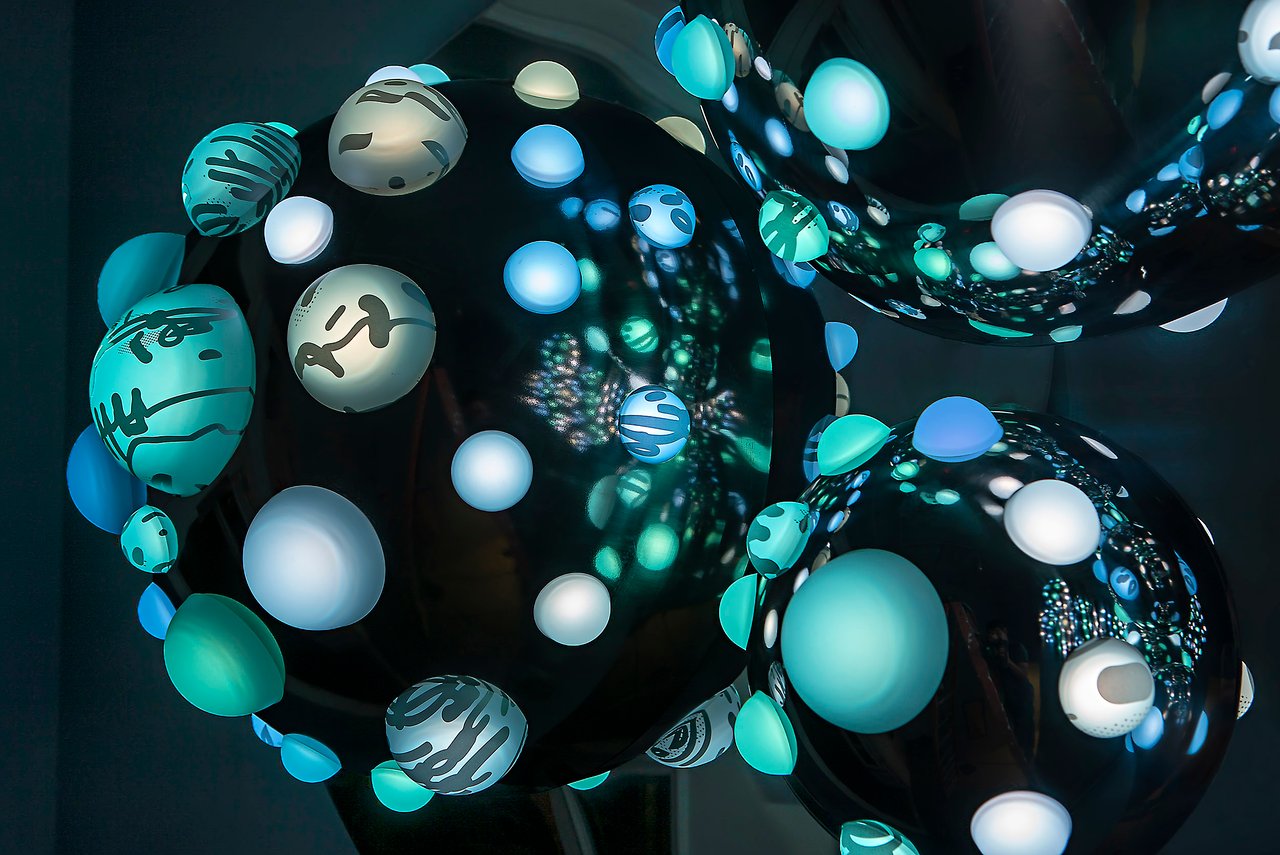
Photo: Grimanesa Amoros Studio
Her practice emerges from a moment that feels almost mythic in its inevitability: standing beneath the northern lights in Iceland, confronted with something so vast, so ephemeral, that documentation would have been an insult. She chose not to photograph it. She chose to absorb it. That decision reverberates through every work she has created since. Light, she understood, is the great equalizer. It belongs to no culture and every culture. It dissolves hierarchy. It bypasses language. It enters the body before the mind has time to defend itself.
Her installations operate at that threshold.
They are monumental, certainly, engineered with precision, embedded with custom electronic systems that would collapse under a lesser vision. Technology, however, is never the point. It is the conduit. The work lives in the space between structure and sensation, where architecture becomes porous and the viewer becomes implicated. She installs each piece herself, programs it in real time, responding not to a blueprint but to a living environment—light behaving like instinct rather than instruction.
There is, perhaps, no clearer articulation of this than her recent commission at Printemps New York.
“Perfect Timing,” installed across the entrance of One Wall Street, stretches over one hundred feet, a luminous threshold where Parisian heritage collides with the relentless tempo of downtown Manhattan. It is not merely an artwork; it is a translation of the city itself. Green, yellow, red—the language of movement, hesitation, command—recomposed into a sequence that pulses like a nervous system. She built it note by note, studying the rhythm of pedestrians, the hesitation at crosswalks, the surge of bodies through space, until light became choreography.

Photo: Grimanesa Amoros Studio
One does not enter Printemps. One passes through her.
That commission, notably the maison’s first collaboration with a light artist, situates Amorós at a rare intersection: art, fashion, architecture, and public life collapsing into a single experiential gesture. It is luxury, yes, though not inert. It breathes. It moves. It insists.
Music, however, reveals the deepest layer of her language.
Her collaboration with the Los Angeles Philharmonic at the Walt Disney Concert Hall did not merely accompany sound; it entered into a kind of symbiotic authorship. Light synchronized with performance down to the second, composed with the same emotional intelligence as a score. She controlled not only her sculpture, but the architectural lighting itself, aligning it with crescendos, silences, and the quiet, unbearable tension that lives between them.
She does not read music.
That fact lands with a kind of electric clarity. She does not read it, yet she understands it—its swell, its rupture, its cadence, its ache. She translates emotion directly into light and color, bypassing notation entirely. It is a form of intelligence that feels almost ancient, predating systems, predating language itself.
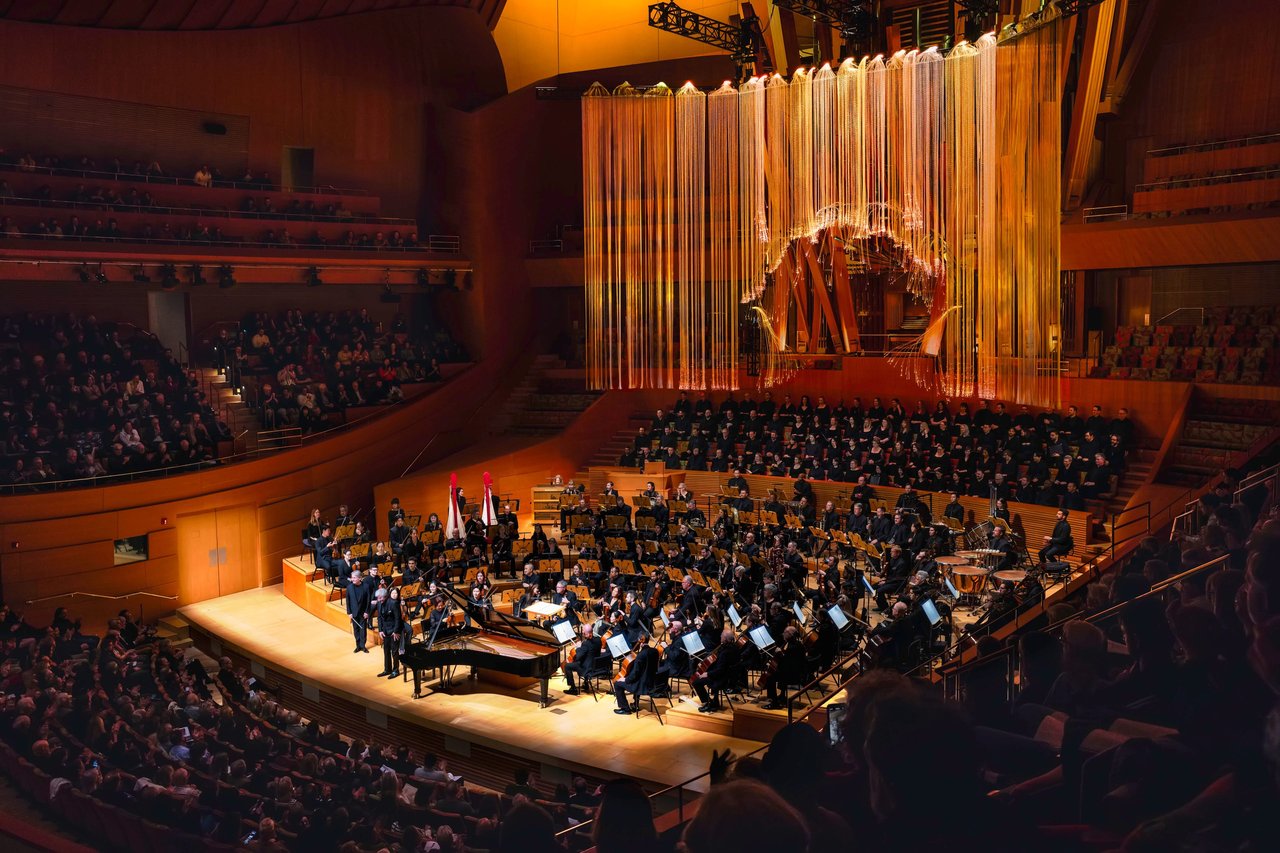
Photo: Grimanesa Amoros Studio
Her career, expansive and undeniably decorated, almost resists enumeration. NEA fellowships. TED Global. Inclusion in the Art in Embassies Program. Installations spanning from the Ludwig Museum to the CAFA Art Museum, from the Katonah Museum of Art to the Seoul National University Museum of Art. These are markers, certainly, though they feel secondary to the sheer force of her vision.
Jane Farver’s observation of her “joyful and generous spirit” lingers with particular weight. Generosity, in Amorós’s hands, is not softness. It is scale. It is the decision to place beauty in the public sphere, to refuse the privatization of wonder, to insist that light—this most universal of mediums—remains available, felt, shared.
Time fractures within her work. Light, always moving, always escaping, becomes her instrument for suspending the viewer in a state that feels both fleeting and eternal. One steps into her installations and something internal recalibrates, subtly at first, then irrevocably.
We have always been drawn to the light, though rarely do we understand why.
Amorós carries that ancient impulse forward, not as inheritance alone, but as offering—extending, with uncommon clarity, the possibility of seeing again, differently, as if the world itself had just been illuminated for the first time.