
FLOW WAVE By Grimanesa Amorós
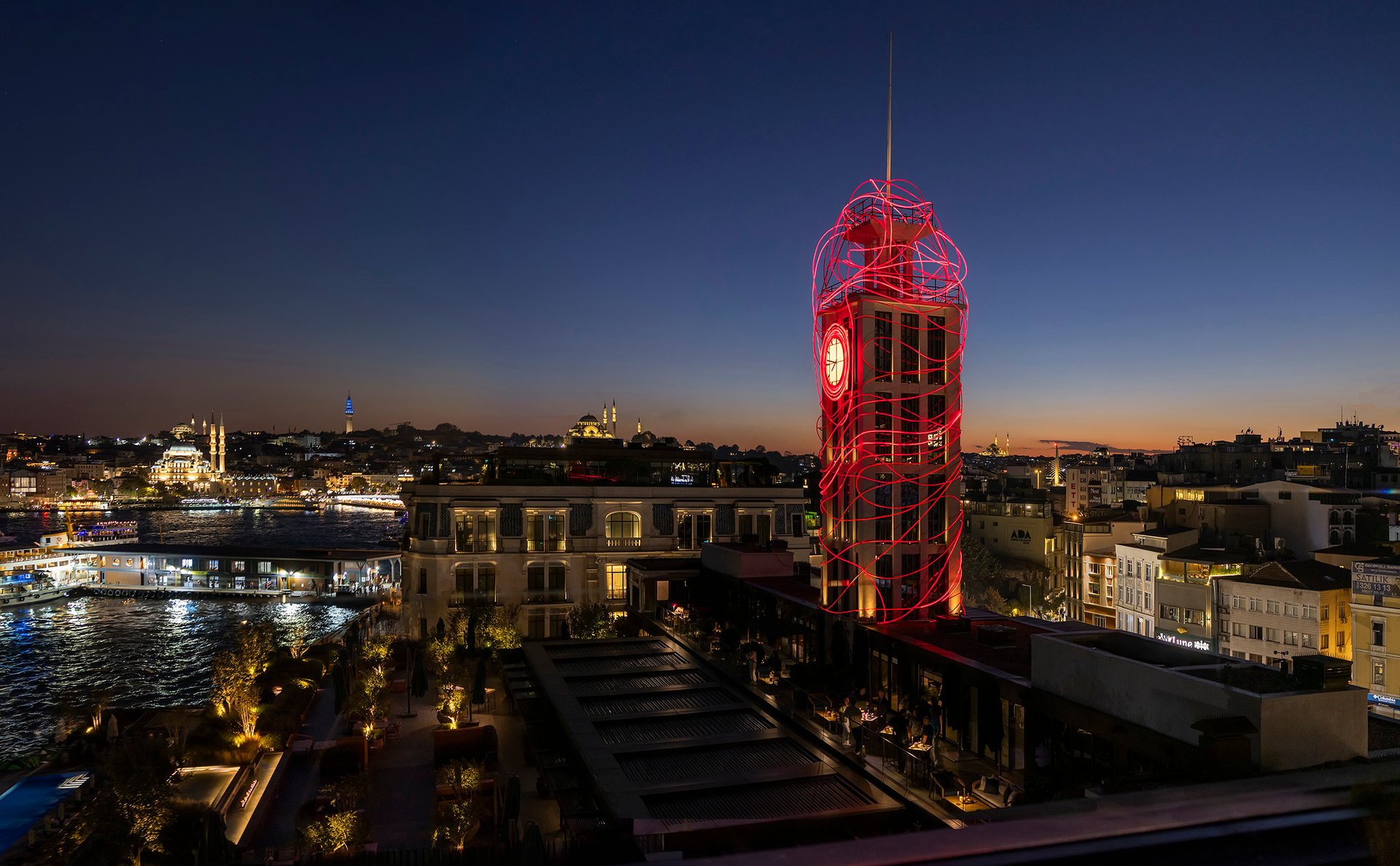
Location: The Peninsula Hotel Istanbul Clock Tower, Istanbul, Turkey. Dimensions: 25 ft x 25 ft x 60 ft (7.62 m x 7.62 m x 18.3 m)
Words by Jayne O’Dwyer
Grimanesa Amoros continues to push the bounds of light and sculpture with an enduring fascination with impossible challenges.
Grimanesa Amorós has always charted her own path.
From her youth, the Peruvian-born artist had a fixation on maps, drawing them into the wee hours well after bedtime. Her mother promptly enrolled her in art classes: “I guess [she] preferred [that] instead of using the blank canvases of the walls at my house,” she muses. Early instruction in drawing and painting then gave way to a practice in sculpture, often influenced by the varying biodiversity of her hometown of Lima. “You’re used to basically extremes growing up on the ocean by the Pacific,” Amorós observes. “It’s the largest ocean but also the roughest, especially in certain times of the year. Then in a couple hours you could go to the mountains, the jungle.”
She traded this extreme landscape for another—the urban jungle of New York City—in 1984, an utterly romantic destination for the burgeoning artist. “I was always watching movies about Harlem, jazz, 42nd Street, the pimps, the 25-cent machines and the out in the open prostitution. New York City has movement and energy that makes it my dream city. It is a city that is not shy of its character; but rather embraces it.” It wasn’t until a fateful trip to Iceland in 2000, however, that Amoros was introduced to the ephemera that would shape the body of her career–marking her departure from painting: the Northern Lights. The tension between wanting to capture the phenomenon and experience it fully galvanized Amorós— and thus launched her artistic life into sights previously unseen. First starting with theater lighting, then eventually LEDs, the multi-media artist began to craft her own radiant world.
Amoros’s work explores the tension of ephemerality, cultural identity, and what it means to inhabit a space.
PERFECT TIMING, a rollicking LED installation in the Printemps windows in downtown New York, echoes the street outside, like traffic lights caught on an overexposed camera. PASSAGE, installed at the Peninsula Hotel in Istanbul, wraps a red LED tubing structure around the central clock tower, adding a sense of whimsy and wonder to the storied building. In a world where digital art attempts to emulate these tubular forms, Amorós’s sculptures don’t undercut physical reality but enhance it all the more.
She blends art and technology seamlessly—and continues to strive for the next challenge that’ll push the bounds of her practice even further.
Below, Amorós speaks about incorporating music into her practice, the importance of time, and her passion for tackling the unknown.
Jayne O’Dwyer: You had this fateful trip to Iceland where you saw the Northern Lights, and that was a momental shift for you artistically.
Grimanesa Amorós: If I had to name places in the world that I have been that I could recall this roughness, [like] you are on Mars, Iceland would be that. Especially in 2000, Iceland was not so visited by tourism. When I saw the Northern Lights, I had to make a choice. If I take my camera, I’m basically just going to try to take the right picture and not live in the moment. So I decided to not take my camera and focus on the moment. I couldn’t believe what I was seeing that I said, “If I could only share with others, would it be amazing?” But because light is ephemeral, how do you share that ephemerality with others? It took me a while to find the right material to be able to diffuse the light in the manner I wanted.
At that time, I only worked with LEDs, and LEDs were “prohibited” then. They were extremely expensive. I started with theater lighting, and I only did one project with those on 125th Street in Harlem. It was called FRENTE FEROZ, and it was a whole corner on Park Avenue and 125th Street. It was a permanent project for many years until Eugene Giscombe, the developer, actually passed away. You could see it from the 125th Street station and the streets below.
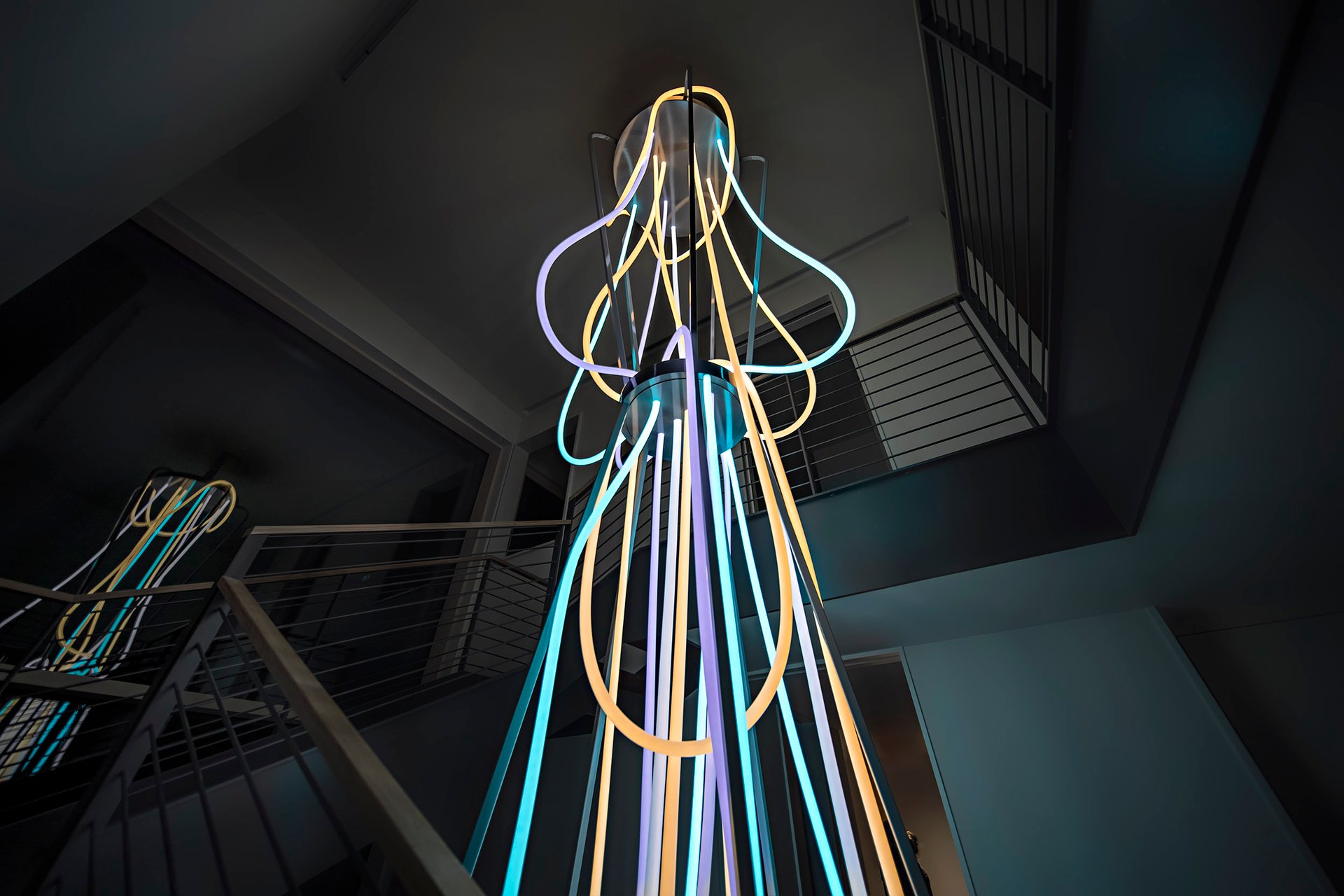
Location: Shelter Island, New York. Dimensions: 4.2 ft x 4.2 ft x 16ft (1.3 m x 1.3 m x 5 m)
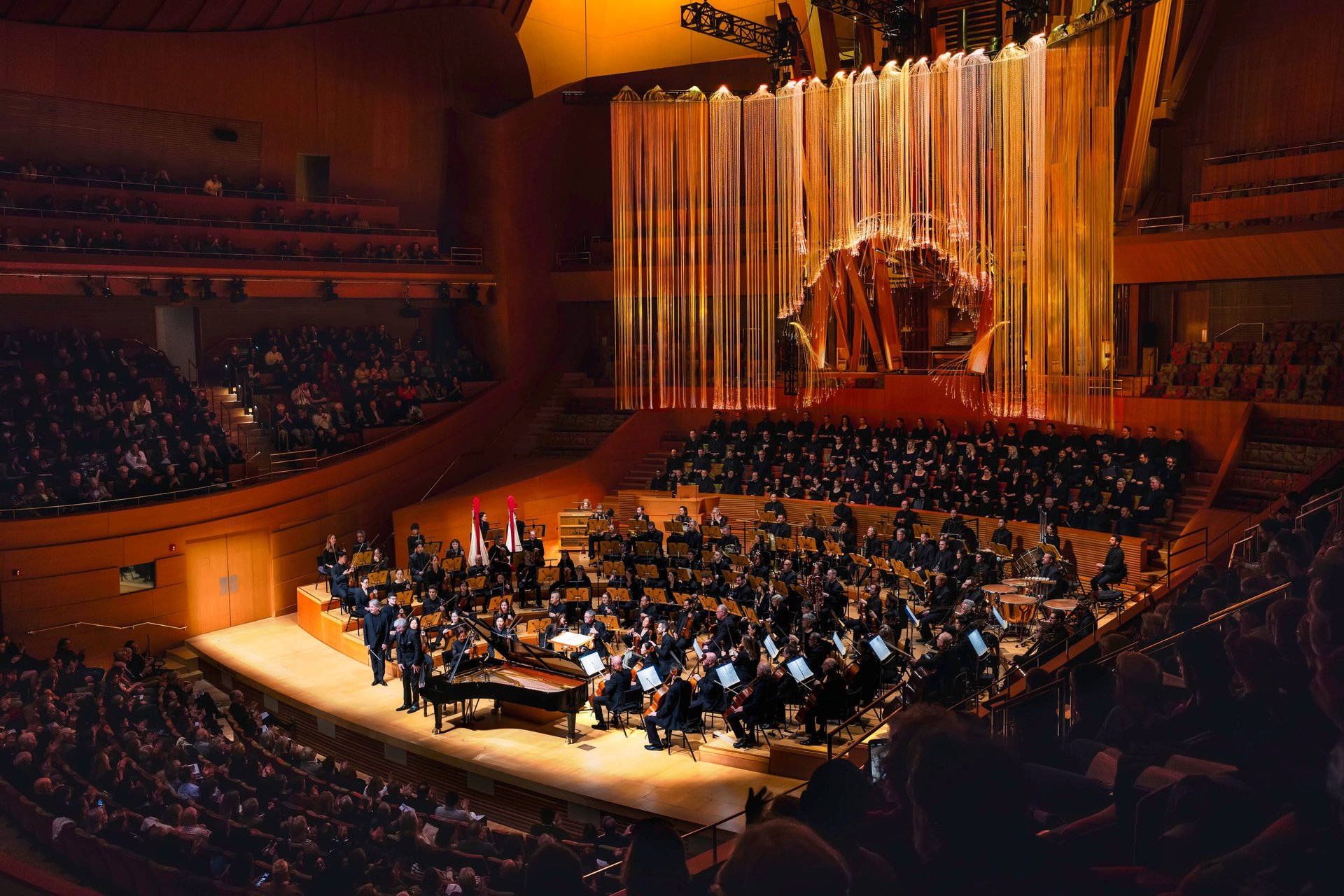
Location: Walt Disney Concert Hall, Los Angeles, California. Dimensions: 60 ft x 35 ft x 5 ft (18.3 m x 10.7 m x 1.5 m)
JO: You’ve described your work as a constant romance with the unknown. Some people find the unknown terrifying. Why do you characterize the unknown as romantic?
GA: It never feels terrifying to me. I love it. I say, “OK, now what am I going to do?” It’s a romance because it’s unknown. That challenge is what excites me.
I combat the unknown with my motto: LPP: love, passion, and perseverance. The unknown is a challenge that I constantly search for, it invigorates me.”
JO: Recently, you created RADIANCE in collaboration with the LA Philharmonic, which takes its inspiration from and is in conversation with Scriabin’s Prometheus, Poem of Fire. It’s a complicated piece because you combine technology, light, architecture, music, and live performance. When did you start incorporating music into your work, and what was it like to create such a complex piece on this scale?
GA: Music has always been important to me. My mother passed away not even a year ago—she had Alzheimer’s—and it’s very interesting how classical music, or any music per se, really activates older people. They might not remember, but the music helps them remember a moment. Neurologically, it was activating parts of the brain because she was singing the songs by memory. She would not remember me, but she remembered the music.
And sound is also ephemeral. Sound and light communicate. With the LA Philharmonic, it was the first time these two ephemeral qualities would go together.
I had to think about how I would address the project. I’m not an architect, I just happen to understand space well. Although I have been to the Disney Concert Hall before, I had to refresh my memory about what Frank Gehry wanted to say with the architecture. I realised that I wanted to make a very important dialogue with the organ because the organ is very prominent. Then I learned afterwards how important the organ was for Frank Gehry.
My work always communicates with the architecture, the piece itself, and the viewer. When these three elements get encapsulated, that’s where the magic happens.
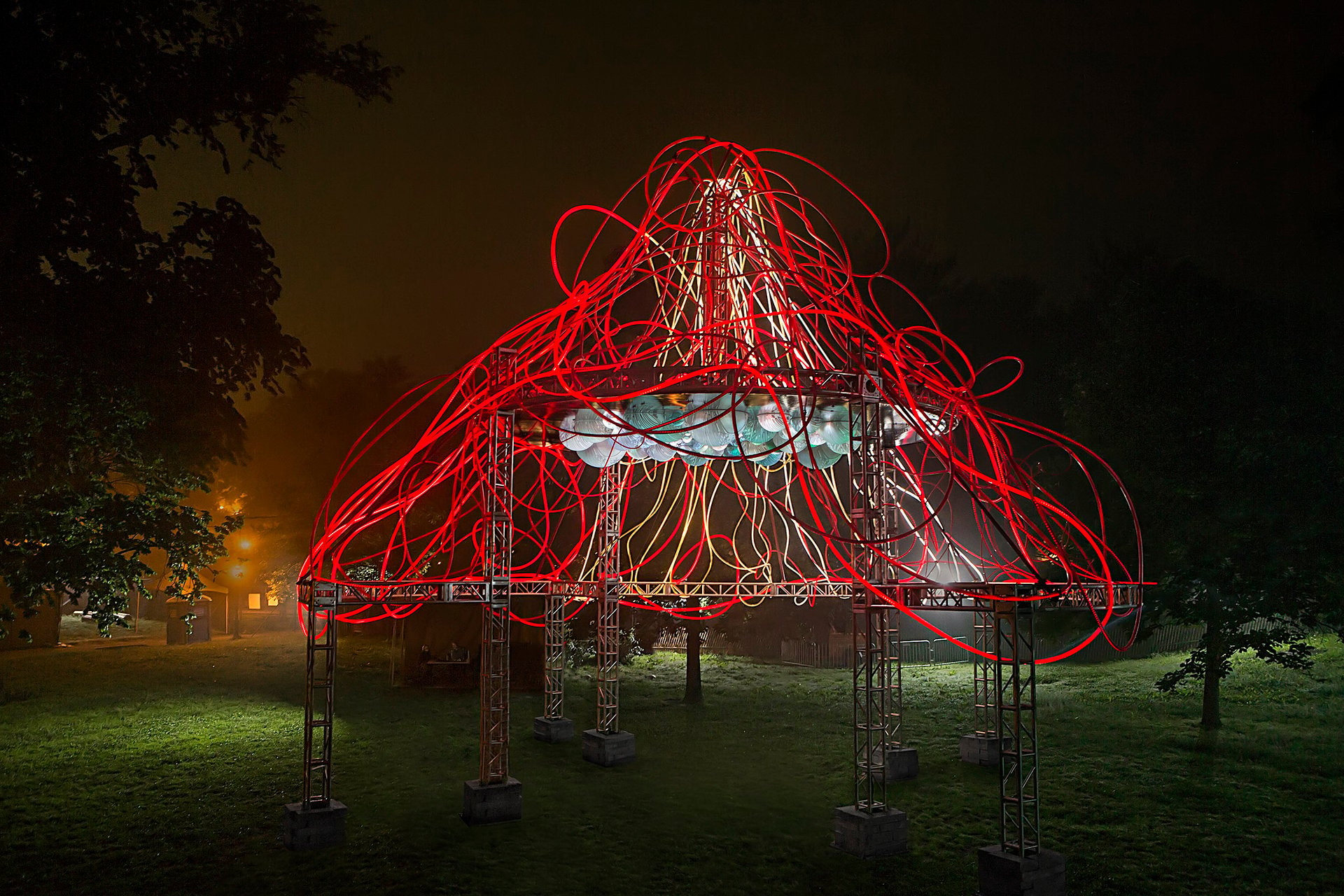
Location: Prospect Park, Brooklyn, New York, USA. Dimensions: 50 ft x 50 ft x 40 ft (15.24 m x 15.24 m x 12.19 m)
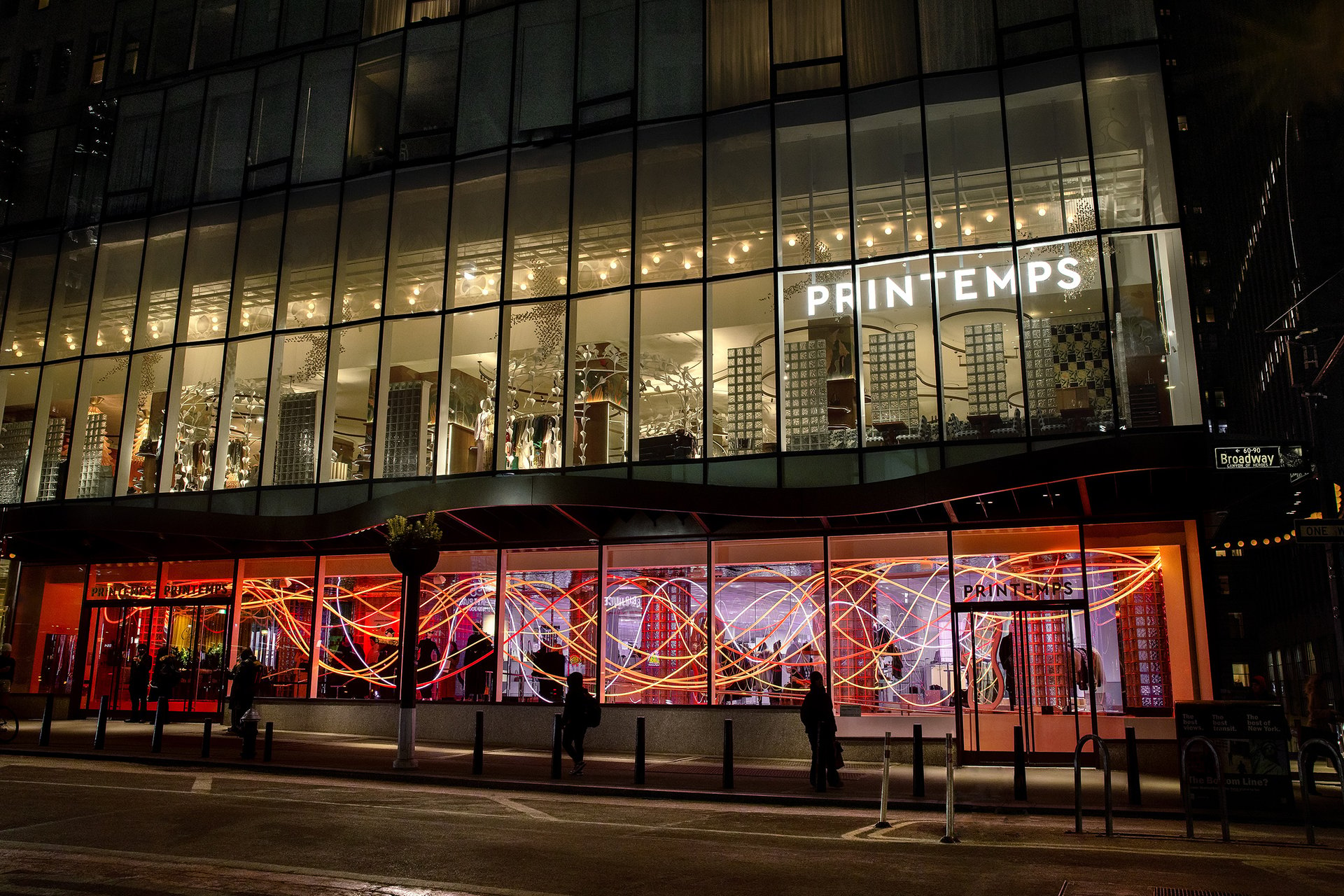
Location: PRINTEMPS New York, New York.
Dimensions: 100 ft x 9 ft x 5 ft (30.5 m x 2.7 m x 1.5 m)
In Prometheus, the colors are essential, so I had to see how I was going to incorporate his vision. My lighting and even my colors are custom. I make and mix them. They are not preset colors that can be found. Creating these colors took me around two weeks. I not only did the piece but also took over the lights of the theater. So, although I was commissioned for Prometheus, I did all the previous music and the theater lighting as well. I was very lucky because I had the support of Esa-Pekka [Salonen],the conductor. I wanted to start everything just with a light on top of him and then end also that way, in complete blackness. Luckily, he thought that was very interesting. Because of the ending of the Scriabin piece, the music becomes very intense, the piano as well. Everything is pure intensity to the max. So the light starts getting white and everything is shaking. All the house lights then go to the audience. The musicians told me that it was the first time that they actually saw the audience during a performance. Then it’s black again.
JO: Time is both a theme and a practicality in your work. Did working with music complicate or clarify your relationship with time?
GA: It made me feel that I was on the right path in my perception of time. We cannot do anything for the past, it’s already happened. When musicians play music, it is precise and exact. Then the second passes. It’s the same with light. There’s something beautiful about it, because they communicate, and they cannot be owned, right? A person, for example, is looking at a piece of mine, perhaps they have to wait 15, 20 minutes, whatever the [duration of the] sequence is, to look upon a moment again, but you cannot grab on to it.
JO: You’ve created sculptures in very inhospitable conditions like extreme heat. What do you enjoy about these challenges?
GA: [It’s] not only emotional but physical. You’re talking about very often minimum 16 hour days, sometimes 24 hours. My favorite part is when the work is done and you then sit by the piece, and nobody knows that you are the artist, you hear what people have to say. This is the reason why I always get so inspired to start a project and enjoy the process.
Like I said, the imagination of people, what they see, and what they say, is incredible. Because an engineer would be able to think about, “Okay, how is this done?” For a writer, you’re much more interested in the conceptual reason as to why that piece exists.
An artist has to have a conceptual reason as to why you are making a piece of art, why you are trying to say as an artist, right? I always try to make pieces that communicate with all sorts of individuals and all types of ages, so make a piece that becomes basically universal, and then, at the same time, timeless.
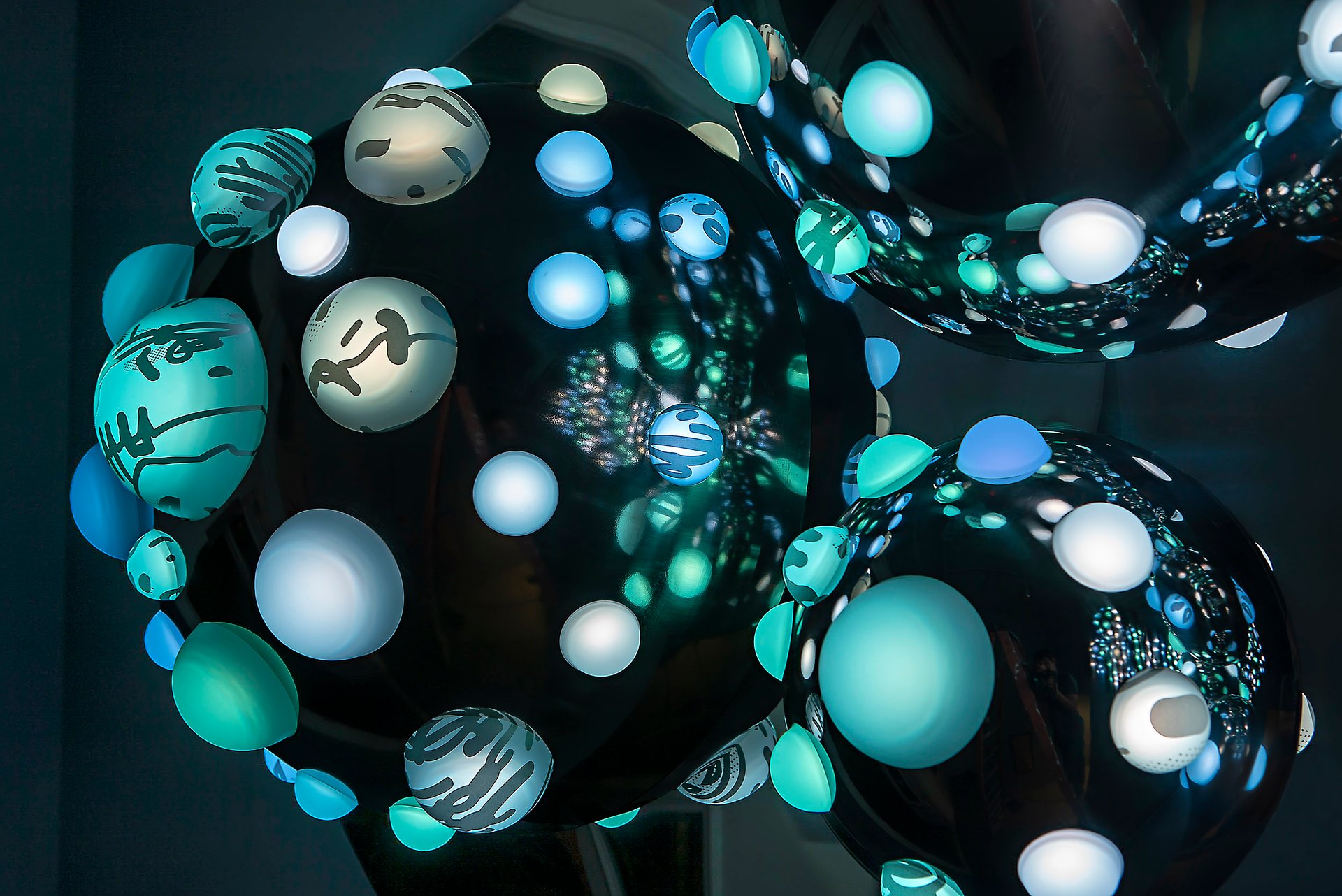
Location: The Bronx Museum Bronx, New York.
Dimensions: 9 ft x 5.3 ft x 5.3 ft (2.7 m x 1.6 m x 1.6 m)
JO: There is a tense social discussion around AI and its destabilizing nature as it relates to art. But when I look at your work, which has obviously embraced technology for decades now, it offers a very grounding force: it enhances a location and its physicality. Are you hopeful about the relationship between art and technology, and what about that union still excites you?
GA: I think that goes back to time. With AI, we are now living at a different type of velocity. Things are much quicker. Right now, it feels a little uncomfortable for a lot of people because they are not used to things moving that fast. Think about how quickly now, instead of going to Google, people are using AI.
So the speed of information has crossed many boundaries in time. I embrace it, and I think that if it’s used properly, like anything else in life, it’s ok. Maybe it’s a more natural process for me because I embrace technology. Technology allows me to do many things I wouldn’t be able to do without electricity.
It’s like when computers came about, right? People born with it become intuitive naturally; others have to learn. I never want to feel prehistoric, so I always try to adapt very quickly.
JO: What are you hoping to tackle next?
GA: I had a project that started in 2018 with the city of New York. Just yesterday, I had a meeting [to find out] that the project has been postponed to 2029. It’s going to be a permanent project in New York, and it’s going to happen. It’s a very interesting project because I will be using light very differently, in a much more ephemeral way. So when you see it, you will see just the light, but not perhaps the encapsulation of a sculpture with it. That’s very important, because it will tell you something new every time you see it. The sequence keeps moving; It breathes like a living organism.
I’m always aware that time is important, so I always want any person that walks in front of the work to at least turn around. That’s what makes it successful, because I’m grabbing a second, two seconds of that person’s time.
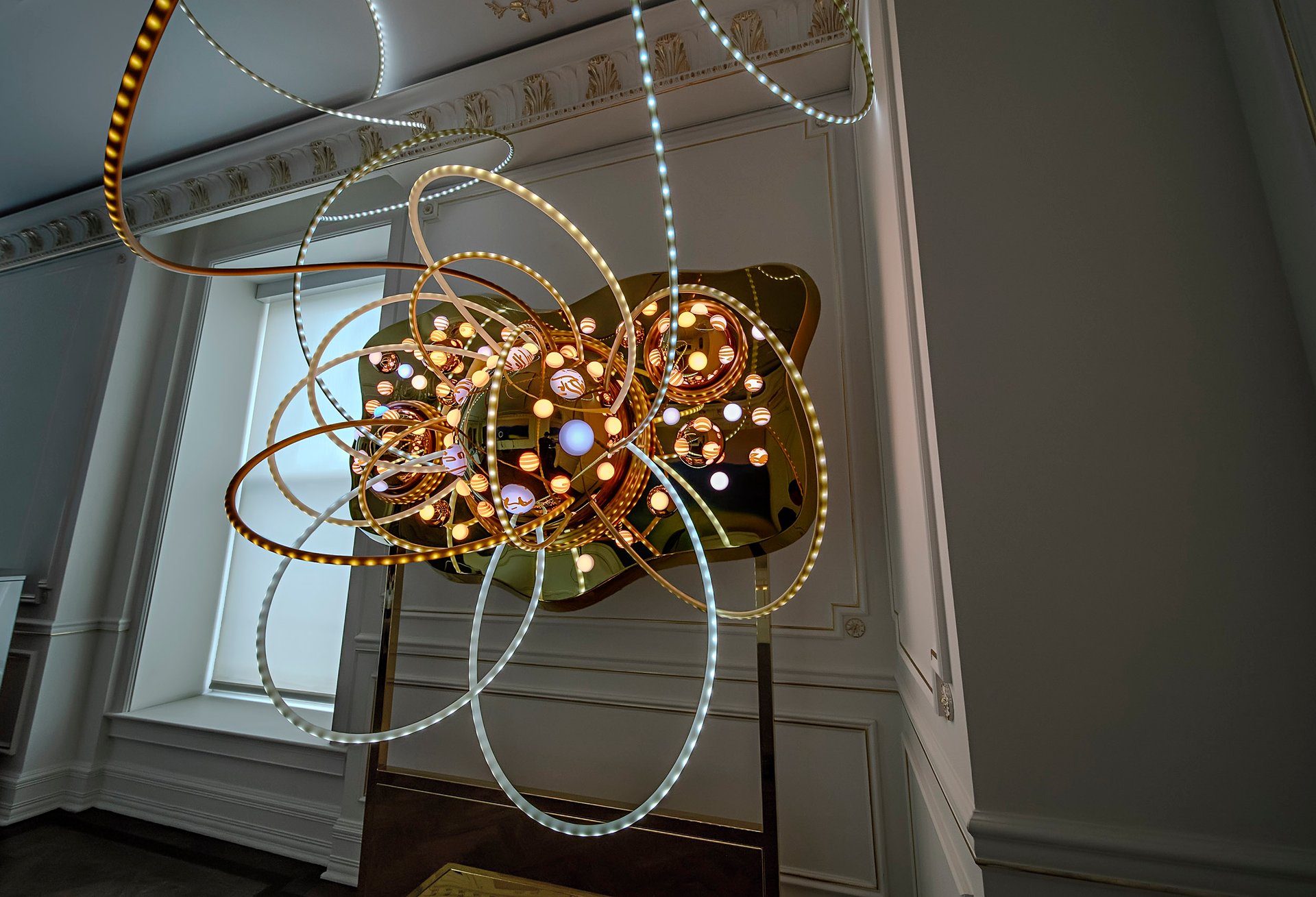

Location: The Bronx Museum Bronx, New York.
Dimensions: 9 ft x 5.3 ft x 5.3 ft (2.7 m x 1.6 m x 1.6 m)